


The best time to visit Grand Tetons is late September if you want wildlife, fall color, and mostly open roads in one trip, and mid-July through August if you want every trail, lake, and high-country route available. That is the honest tradeoff: late September gives up warm hiking weather and some in-park services, while July and August give up the quiet dawns and the rutting elk that make the drive worth it in the first place.
Grand Teton National Park is the Wyoming park that runs along the eastern base of the Teton Range, just north of the town of Jackson and the Jackson Hole valley. It stays open year round. But Teton Park Road is closed to cars from November 1 through April 30 between Taggart Lake Trailhead and Signal Mountain Lodge, and that single closure reshapes how you move through the park far more than temperature does. A February visit and a July visit are not the same trip in different jackets. They are different trips.
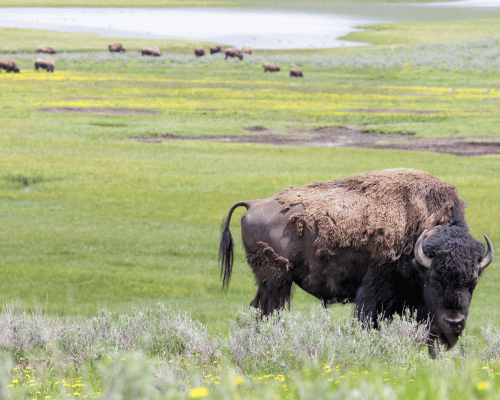


Best Time to Visit Grand Tetons: The Four Seasons Compared
Every season here trades something away. Summer buys access and costs you solitude. Fall buys animal behavior and costs you services. Spring buys quiet and costs you roads. Winter buys emptiness and costs you almost everything else.
| Season | Wildlife activity | Crowds | Access | What a guided tour day looks like |
|---|---|---|---|---|
| Spring (April to early June) | Bears out of hibernation, elk returning to the valley, newborns in the willows | Light, and the pullouts are usually empty | Partial. The interior loop road stays closed to cars until roughly May 1 | Valley floor and river corridor, long patient stops, almost no competition for a sightline |
| Summer (mid-June to mid-September) | Animals spread out and move mostly at dawn and dusk | Heaviest of the year, parking lots full early | Full. Park roads, hiking trails, and boat service all running | Pre-sunrise departure, positioned before traffic builds, back before midday heat shuts activity down |
| Fall (mid-September to late October) | Strongest of the year. Elk rut, moose rut, bears feeding hard before winter | Drop sharply after Labor Day | Good, with staged road closures beginning in October | Dawn in the open meadows for bugling elk, gold aspen as backdrop, unhurried pace |
| Winter (November to March) | Concentrated at low elevation, easier to find but in fewer places | Lightest of the year | Limited. The interior road is closed to vehicles and groomed for ski and snowshoe travel | Short daylight, highway corridor viewing, animals against snow with nothing to hide behind |
If you read one row, read the fall one. It is the season where animal behavior, light, and elbow room line up at once, which is rare in any national park.
Best Time to Visit Grand Tetons by Month
The seasons hide a lot of variation, so here is the same calendar broken down month by month. If a guest asks which month we would choose if we could only run wildlife mornings for four weeks a year, the answer is the stretch from about September 20 to mid-October, with June next because the calves are on the ground.
| Month | What is happening in the park | Crowds and services | Verdict |
|---|---|---|---|
| January and February | Interior road closed to cars and used by skiers and snowshoers; elk gathered on the refuge; bighorn sheep low near Teton Village | Deep winter. Short days, cold mornings, very few people | Good for an animal-watching trip, poor for scenery drives |
| March | Still full winter in the park, with the first signs of animals shifting as daylight lengthens | Quiet, lingering snow | Fine for winter activities, weak for hiking |
| April | Bears leave their dens; the closed interior road is open to bikes and walkers before cars return | Mid-April starts the year’s weakest access window | A bad time for trail plans, a decent one for valley animals |
| May | Interior road reopens to cars May 1; Moose-Wilson Road stays closed to mid-May; low trails clear late in the month | Lodges and services opening in stages | Better after the middle of the month |
| June | Calves on the ground, wildflowers in the valley, snow still on the Teton Crest Trail | Crowds building through the month | Strong for animals and green valley views of the Tetons |
| July | Everything open; animals active at dawn and dusk; wildfire smoke possible from mid-month | Peak season, lots full early | Prime time for hiking and lake days |
| August | Same full access as July, with the same smoke risk | Busiest stretch of summer | Best for the high country, weakest for quiet dawns |
| September | Crowds drop after Labor Day; aspens start turning around September 18; bull elk begin bugling late in the month | Thinning fast | The single best month for most visitors |
| October | Rut into early October, bears in hyperphagia, roads closing in stages; the interior road shuts to cars after October 31 | Light | Excellent early, unpredictable late |
| November | Interior road closed to cars from November 1, often with too little snow to groom | Very light | A shoulder gap with little running |
| December | Elk arrive on the refuge and winter operations start up | Holiday bump in Jackson, quiet inside the park | Better after mid-month, once snow allows grooming |
Road dates come from the National Park Service, which posts current closures on its Grand Teton operating hours and seasons page. Check it again the week you travel, because snow can delay openings.
Why Elevation Puts the Teton Calendar Four Weeks Behind
Grand Teton runs on snowpack, not on the calendar, and that is what most travel guides skim past. The valley floor sits around 6,800 feet. Trailheads in the high country push past 9,000 feet. Snow lingers on north-facing slopes into July most years, so roads, lake access, and trail conditions shift with how the winter actually went, not with the date.
June can mean wildflowers in the valley and deep snow on the Teton Crest Trail on the same morning. Late May visitors are often surprised that Jenny Lake Road is still gated. Mark Bolen, founder and guide at Teton Wild, keeps a simple rule for this: add four weeks to whatever your phone weather app suggests when you are planning anything above 8,000 feet. The Snake River corridor and the eastern flats warm up earliest. The range itself stays winter-locked long after the valley photos suggest otherwise.
Spring in Grand Teton National Park: April Through Early June
Spring is the quietest driving season and the most logistically awkward. Teton Park Road typically opens to vehicles around May 1, though the exact date moves with snow conditions. Until then the inner park loop is closed to cars and open to bikes, walkers, and skiers, which remains one of the genuinely good secrets of visiting Grand Teton before the summer season starts.
April and early May bring cool mornings, wet meadows, and rivers swelling with snowmelt into the Snake River. Animal activity ramps up fast. Moose feed in the willow flats. Elk move back into the valley from their winter ground at the National Elk Refuge. Bears come out of hibernation hungry, and grizzly cubs are sometimes visible at a distance along Pilgrim Creek and the Pacific Creek area.
Lower-elevation trails start to clear by late May. Higher routes stay snow-covered well into July. If you are visiting in May, build the trip around the valley floor: Schwabacher Landing, Mormon Row, Antelope Flats Road, and the Snake River overlooks. Do not plan a May trip around Cascade Canyon. You will spend it punching through rotten snow above Inspiration Point.
Something we hear every spring: guests booked flights around a specific trail and did not know the road to it was still gated. Check road status before you commit to a hiking itinerary in May, not after. Spring is a weak window for a trail-heavy plan and a strong one for empty pullouts, active animals, and the first Grand Teton wildflowers coming up through the valley meadows.
Summer in Grand Teton: Mid-June to Mid-September
Summer is the season for full access, and July and August are the only months when essentially everything is open at once: high-country hiking trails, all campgrounds, the Jenny Lake boat shuttle, the lodges, and the interior loop road in both directions. Nothing is gated. Nothing is groomed. Everything runs.
Those two months deliver the longest sunny days and the widest range of things to do. Daytime highs in the valley sit in the high 70s to low 80s. Mornings drop into the 40s. Dry air at 6,800 feet keeps the heat from feeling oppressive, which is also why dehydration sneaks up on people faster than they expect.
Jenny Lake becomes the busiest place in the park. The boat shuttle to Cascade Canyon runs every fifteen minutes during peak summer days, and the parking lot fills by 8 a.m. on weekends. If Jenny Lake is on your list, get there before sunrise or trade it for String Lake, which has similar water and a fraction of the people. For a fuller list of summer days out, see our rundown of things to do in Grand Teton National Park.

Where Wildlife Gathers on a Summer Morning
Finding animals in summer is a dawn and dusk job, roughly 5 to 8 a.m. and 7 to 9 p.m. during the peak weeks. They move into shade and water through the heat of the day. The same scenic loop that produces nothing at noon will produce half a dozen species at first light.
The most reliable summer locations:
- Oxbow Bend at sunrise, especially for moose, beaver, and river otter
- Antelope Flats Road for bison and pronghorn
- Willow Flats for moose and the occasional grizzly
- Christian Pond and the Jackson Lake Lodge area for waterfowl and bears
- Pilgrim Creek and the meadows north of Moran Junction for grizzly sightings
Bring binoculars at minimum. A spotting scope is better. Stay in your vehicle when an animal is close to the road, and keep at least 100 yards from bears and wolves and 25 yards from everything else.
Wildfire Smoke, the Part Summer Guides Leave Out
From mid-July through September, smoke from regional wildfires can settle into Jackson Hole and hide the Teton Range for days at a time. It is not predictable, it does not happen every year, and the park cannot do anything about it. If you are booking a photography trip in late August, build in a spare day so one smoky morning does not cost you the whole shoot.
Fall in the Tetons: Mid-September to Late October
Fall is the strongest season for wildlife and a serious contender for the best season in Grand Teton National Park overall. Aspens turn gold across the range starting around September 18 and peak roughly the last week of September, depending on how the year’s weather ran. Gold groves, snow-dusted peaks, and bugling elk together are what most postcard images actually capture.

Visitor numbers fall off sharply after Labor Day. By mid-September you can drive the interior loop without hitting a bottleneck. By mid-October, sections are closing in stages and you will often have the major pullouts to yourself.
The elk rut peaks late September into early October. Bulls bugle at dawn and dusk in the open meadows near Willow Flats and along the National Elk Refuge boundary, and it carries across the whole valley. Our Wyoming elk guide covers how the herd moves between summer range and the refuge. Mark Bolen’s observation from guiding this stretch: the sound travels farthest on the coldest, stillest mornings, so the dawn you least want to get up for is usually the one worth setting the alarm for. Moose are in rut at the same time and bulls turn aggressive. Give them more room than feels necessary; our Wyoming moose guide explains the warning signs.
Bears feed heavily through October in a phase called hyperphagia, packing on fat for hibernation and not being picky about where they do it. Berry patches along Pacific Creek and Two Ocean Lake produce regular grizzly sightings until the first hard freeze. If bears are your priority, our guide to Grand Teton bears and their seasonal patterns covers where they concentrate and when.
Best fall locations:
- Oxbow Bend, especially the morning reflection of Mount Moran with fall color
- Schwabacher Landing for sunrise reflections
- Antelope Flats Road for bison in golden grass
- The Moose-Wilson Road, narrow and slow, which produces the highest density of animal sightings in the park and closes for the season around November 1
Pack for swings. A 70-degree afternoon can turn into a 28-degree morning the next day, and snow on the high peaks usually starts in September. For a closer look at the color window and where it peaks first, see our breakdown of autumn in Grand Teton.
Winter in Grand Teton: November to March
Winter turns the park into something most visitors never see. Teton Park Road closes November 1 and reopens around May 1, so the closed interior road becomes a groomed route for cross-country ski touring, snowshoe travel, and fat bikes in places. Animals concentrate at low elevation, which makes it the easiest season to find them and the hardest season to reach them. The National Elk Refuge holds 7,000 to 8,000 elk between December and April. Bighorn sheep drop toward Teton Village. Wolves follow the herds.

We keep the winter detail on its own pages rather than repeating it here. For conditions, formats, and how a cold-weather trip actually runs, see our Grand Teton winter tour page and our guide to Jackson Hole winter wildlife tours from December through March. For clothing and non-tour activities, we cover what to wear in Jackson Hole in winter separately.
The Worst Weeks to Visit Grand Teton National Park and Why
Two windows are genuinely weak, and most guides mention neither. The first is mid-April to mid-May, when roads are closed or partly closed, trails are mud and rotten snow, and most park lodges have not opened. The effort-to-payoff ratio is the worst of the year.
The second runs from early November to roughly mid-December, and it catches people who think they are booking a winter trip. The interior loop road is already closed to vehicles by then, but there is often not yet enough snowpack for it to be groomed for skiing. You lose the driving access of fall without gaining the snow travel of deep winter. Summer services are shut, winter operations have not fully started, and the days are short.
If your dates are locked into either window, shift expectations toward the valley floor and the highway corridor, go out at dawn, and treat the trip as an animal-watching trip rather than a scenery trip. That is the version of those weeks that works.
Planning a Grand Teton Trip Around a Guided Wildlife Tour
A few practical decisions matter more than which month you land on.
Where to stay: Park lodges (Jackson Lake Lodge, Jenny Lake Lodge, Signal Mountain Lodge) book out 6 to 12 months in advance for summer. If you are inside the 90-day window for a July trip, you are staying in Jackson. Jackson works fine, but it is a 25-minute drive to Moose Junction and another 30 minutes to Jenny Lake, which is real time you burn every single morning.

Campgrounds: Every campground site inside the park is now reserved in advance through Recreation.gov, so there is no first-come line to join at dawn. Jenny Lake is tents only and the hardest to get; Gros Ventre and Colter Bay are larger. If you want a campground site in July or August, book the day your dates are firm.
Flights: Jackson Hole Airport sits inside the national park boundary, which is rare for a United States airport. It is also small, expensive, and weather-affected. Salt Lake City is a five-hour drive and often saves a meaningful amount on the ticket.
Days needed: Three full days is the realistic minimum. Five is better. The mistake we see most often is a single Grand Teton day tacked onto a Yellowstone itinerary. You can do it, but you will see pullouts and not much else. Yellowstone National Park and Grand Teton share an ecosystem and connect through the John D. Rockefeller Jr. Memorial Parkway, but they run on different rhythms and reward different pacing.
Why a guide changes the math: if wildlife is the reason you are coming to Wyoming, a local guide compresses the search. Guides know which meadow held the grizzly sow last week, where the wolf pack was reported at dawn, and which willow stand a bull moose has been bedding in. Plenty of people find animals on their own. But a half day with someone tracking movement daily replaces days of solo hunting, and it front-loads the trip so your remaining time goes to what you found instead of looking. If you are weighing formats, we cover the tradeoffs in why people book a private wildlife tour.
Start by picking the season from the table above, then work backward. Lock lodging first if you are traveling in July or August, since that is the constraint that fails earliest. Book the tour second and put it on your first full morning, because a guide will tell you where animals have been moving all week, which makes every unguided day after it more productive. If your goal is the best time to visit Grand Tetons for wildlife specifically, aim for the last ten days of September and reserve a Teton Wild tour date as soon as your flights are set.
Frequently Asked Questions
What is the worst time to visit Grand Teton National Park?
Mid-April to mid-May is the most logistically difficult window. Some parts of the park are still closed, most lodges are not open, trails are muddy or snow-covered, and lakes remain iced over in places. Animals are active, but access is limited enough that most travelers find the window frustrating unless they specifically want a quiet, low-mobility trip.
What month has the best wildlife viewing in Grand Teton?
Late September through mid-October is the strongest stretch of the year. Elk are in the rut and bugling at dawn and dusk. Bull moose are active and visible. Bears are in hyperphagia and feeding heavily before hibernation, and bird migration is under way. The combination of behavior, thinner crowds, and low-angle light beats peak summer for serious observation.
How many days do you need in Grand Teton?
Three full days is the realistic minimum for a meaningful visit. That gives you one day for the inner park loop and the main pullouts, one day for a hike such as Cascade Canyon, Taggart Lake, or Death Canyon depending on conditions, and one day for wildlife viewing at dawn and dusk. Five days lets you add a backcountry day or a Jenny Lake boat and hike combination.
Can you visit Grand Teton and Yellowstone in the same trip?
Yes, and it is the most common multi-park itinerary in the region. The two parks connect through the John D. Rockefeller Jr. Memorial Parkway, with about a 60-minute drive between Colter Bay in Grand Teton and the Yellowstone south entrance. Plan a minimum of three days for each park. Combining them into a five-day total trip is doable but rushed.