


Grand Teton animals include bears of both species, moose, elk, bison, wolves, and more than 300 species of birds. Grand Teton National Park sits inside the Greater Yellowstone Ecosystem, one of the largest intact temperate ecosystems on Earth, and the herds cross the Yellowstone National Park boundary as if it were never drawn.
This page is the hub: what lives in the valley, where to look, and how hard each animal is to find, with a link to the deeper guide for each species. One pattern holds across the list. The south end of the valley, from Moose-Wilson Road to Antelope Flats and the Gros Ventre, usually produces more wildlife sightings than the photogenic north end around Jackson Lake, because sagebrush flats, river bottoms, and forest edge sit close together there.
Grand Teton Animals at a Glance
Ten species account for nearly every large-animal encounter in Jackson Hole.
| Animal | Where to look | Best season | Difficulty | Optics |
|---|---|---|---|---|
| Grizzly | Moose-Wilson Road, Pilgrim Creek | May to October | Moderate | Yes |
| Black bear | Forested corridors, Moose-Wilson Road | May to October | Moderate | Yes |
| Moose | Oxbow Bend, willow wetlands | May to September | Easy | No |
| Elk | Mormon Row, National Elk Refuge | September to November | Easy | No |
| Bison | Antelope Flats, Buffalo Valley | Year-round | Easiest | No |
| Pronghorn | Open sagebrush, Mormon Row | April to October | Easy | No |
| Wolf | Gros Ventre, Elk Ranch Flats | Winter | Very hard | Yes |
| Coyote | Sagebrush flats valley-wide | Year-round | Easy | No |
| Eagle and osprey | Snake River, Jenny Lake | April to September | Moderate | Yes |
| Bighorn sheep | Teton Range above Death Canyon | Spring, late fall | Hardest | Yes |
Difficulty assumes two or three days in season, not one midday drive. In the Optics column, Yes means binoculars or a spotting scope make the identification; No means the animal usually stands close enough to read with the naked eye.
1. Grizzly Bears
May to October. Shoulder hump, dished face, long front claws. They emerge from hibernation hungry in April, and one can smell food from up to 18 miles away. The guide to bears in Grand Teton covers encounter protocol.

2. Black Bears
May to October. No hump, straight facial profile, and color proves nothing: park bears run jet black, cinnamon, and blonde. They favor forested river corridors and climb trees fast, which is where the play dead versus fight back rule comes from.

3. Moose
May to September. The largest member of the deer family is the most commonly seen big animal here, browsing willows along the Snake River. A cow with a calf is more dangerous than any bear, so give her the full 25 yards the park ranger corps requires. Wyoming moose guide.

4. Elk
September to November. They graze quietly all summer, then the autumn rut takes over: bulls bugle and lock antlers from mid-September. In late fall the herds migrate to the National Elk Refuge in Jackson, where roughly 7,000 to 8,000 animals winter. From mid-December to early April, refuge sleigh rides carry visitors out among them. Wyoming elk guide.

5. Bison
Year-round. North America’s largest land mammal. The Jackson herd is managed toward about 500 animals and moves between the park and the refuge, with orange “red dog” calves each spring. Antelope Flats is where most visitors see bison and pronghorn graze side by side in summer. They look slow, but one can hit 35 mph. Facts about the Grand Teton bison herd.

6. Pronghorn Antelope
April to October. Despite the nickname, these are the only surviving member of their own family, Antilocapridae. The local herd runs roughly 150 miles each way to the Upper Green River Basin, and they reach 55 mph, built to outrun an American cheetah that went extinct 12,000 years ago.

7. Wolves
Winter. A wolf sighting is possible but never plannable. Packs recolonized the region after the 1995 Yellowstone reintroduction. Winter works best: tracks print in snow and bare vegetation opens sightlines. First light in the Gros Ventre drainage is the honest bet. The photo here shows a coyote, the animal most often reported as a wolf. For a guided winter attempt, see Jackson Hole winter wildlife tours.

8. Coyotes
Year-round. They run 25 to 35 pounds against a wolf’s 80-plus, with narrower muzzles and a lighter trot. If you cannot tell which canid you are watching, the wildlife species identification guide lays the tells out side by side.

9. Bald Eagles and Ospreys
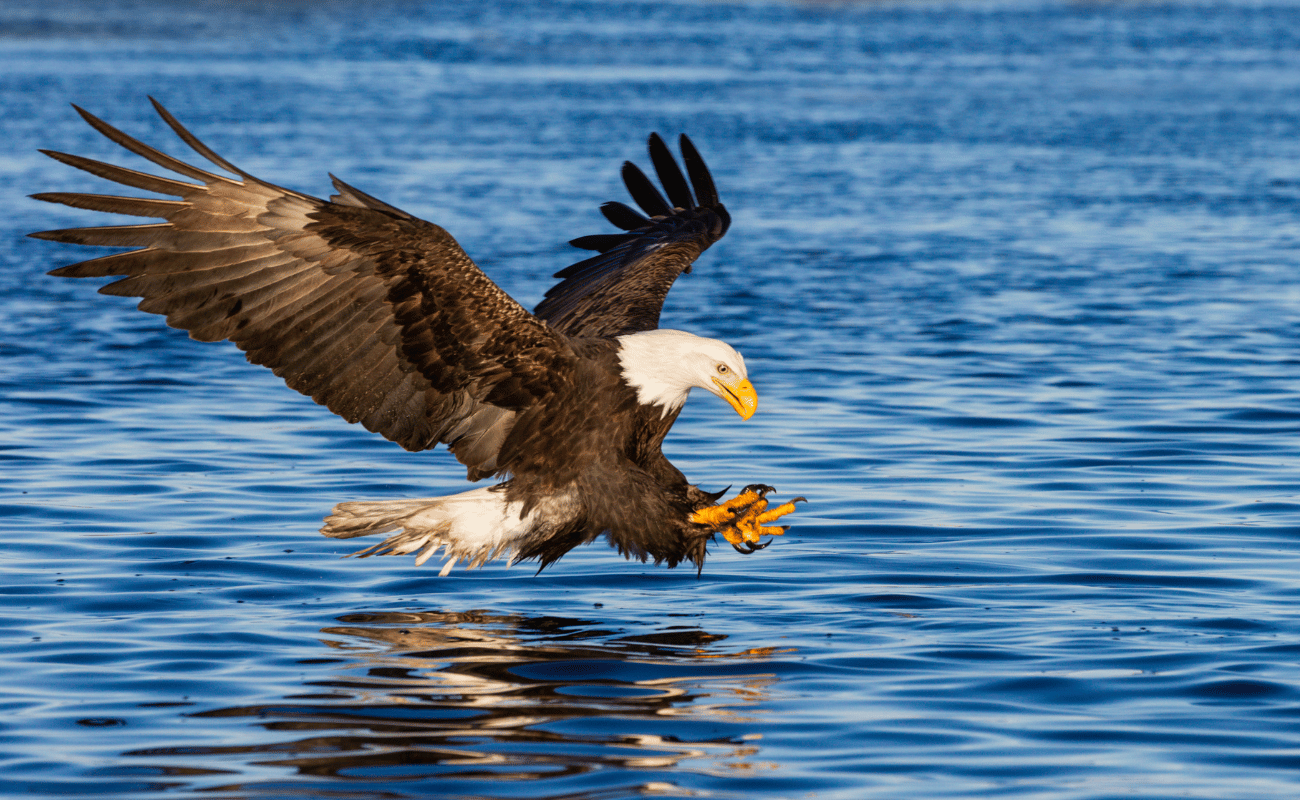
April to September. Eagles nest along the Snake River and hunt fish year-round. Ospreys arrive in April and dive feet-first for trout. The tell: ospreys show a white belly and brown eye mask, while eagles get the white head only after age five. Trumpeter swans are worth a morning too.
10. Bighorn Sheep
Spring and late fall. The hardest of the ten. This herd is small, isolated, and spends most of the year on alpine ground casual visitors never scan. Spring and late fall, when they drop lower, is the window. A ram’s curled horns can weigh 30 pounds. Herd details.

Which Animals Visitors Miss Most, and Why
Four of the ten disappoint people regularly, for structural reasons rather than bad luck.
- Wolves. Low numbers across enormous territory, active at the edges of daylight. Treat one as a bonus, never a plan.
- Bighorns. The herd lives above where anyone is looking. People scan the valley floor while the sheep sit on a cliff band a thousand feet up.
- Moose in midsummer. Still here in July, just bedded deep in willow shade by mid-morning. Visitors decide they left. They got hot.
- Beaver, river otters, and mule deer. The water animals keep their own dawn and dusk schedule, and the deer blend into sage so well that most people drive past them.
Mark Bolen, founder and guide at Teton Wild, makes the same point every season: what you drive past at 11 a.m. is standing in the open at 6 a.m. Winter shifts the math again, because snow concentrates the herds and strips the cover. See winter animal adaptations for why.
Smaller Grand Teton Animals Worth Slowing Down For
Small mammals and birds fill the gaps between the big ten. Yellow-bellied marmots sun on boulder piles, and pikas, small rabbit relatives that stack cut grass into haypiles for winter, call from talus slopes along the higher trails. Uinta ground squirrels pop up across the sagebrush in spring and early summer. Trumpeter swans and sandhill cranes work the wetlands at Oxbow Bend and Willow Flats.
Field Craft That Changes Your Odds
Most visitors drive the main park road at midday and wonder where everything went.
- Go early or go late. Early morning or late evening is prime wildlife viewing. Between 10 a.m. and 4 p.m., most mammals bed down in shade.
- Bring real optics. A 10×42 binocular beats a phone camera every time. Wildlife photography at any useful distance needs a 400mm lens minimum.
- Stop for the cars. A cluster of parked vehicles on a pullout is the local wildlife alert system. If five cars are stopped, something is out there.
- Stay at least 100 yards from bears and wolves, 25 yards from everything else. This is National Park Service regulation, not a suggestion. Violations draw fines and habituate wildlife toward the behavior that gets them killed.
- Carry bear spray and know how to use it. Practice removing the safety before you need it. Spray is effective inside 30 feet and useless in strong wind.
The biggest single improvement costs nothing: park, get out, and glass one hillside for several minutes instead of scanning through a windshield. A moving animal catches the eye; a bedded one only shows up when you hold the binoculars still. For camera settings and lens choices, see these tips for photographing wildlife in Grand Teton.
Plan Your Trip Around Grand Teton Animals
September is the one month when every row in the table is in season except wolves and bighorn sheep, which makes it the best time of year for a first visit. The best time to visit Grand Teton guide breaks the calendar down month by month.
Build the trip around dawn and dusk rather than midday sightseeing. Drive the south end your first morning and sit at Oxbow Bend before the light goes flat. If you want the shortcut, book a guided tour. A good guide runs the Grand Teton animals circuit in small groups, knows which drainage produced a bear yesterday, and handles the optics. Teton Wild runs exactly that kind of trip.
Book your Grand Teton wildlife tour today and see the park’s most iconic wildlife up close.
Frequently Asked Questions
What animals are in Grand Teton National Park?
The park is home to roughly 61 mammal species and more than 300 species of birds. The ones you are most likely to see are moose, elk, bison, bears of both species, and mule deer. Smaller residents include beavers, river otters, marmots, and pikas. Notable birds include bald eagle, osprey, trumpeter swan, and peregrine falcon.
Are there grizzly bears in Grand Teton?
Yes. They live throughout the park and the surrounding Greater Yellowstone Ecosystem. Sightings are most common from May to October along Moose-Wilson Road, Pilgrim Creek, and Oxbow Bend. The population has grown steadily since the 1980s.
Are there any poisonous snakes in Grand Teton?
No, the park has no venomous snakes. Its elevation and cold winters keep rattlesnakes out. The only snakes you are likely to see are harmless garter snakes near water and in valley wetlands.